Website Architecture
By following the link below, you will find a technical introduction to the structure of the Museum of Hearth website and guidance on how to navigate it.
Current Projects
Computing within the Ocean – Surfing through www
&&&
Tao of Ocean Swimmer
&&&
Language of sensual Mathematics
&&&
Circumnavigating Infinity
&&&
Computing in the Ocean & Surfing within World Wide Web
&&&
&&&&&&&
&&&&&
Museum of Hearth
a Living Museum of fireplaces, related technologies and culture
Museum of Hearth is a living museum and training space dedicated to the control of fire , fireplaces and all related technologies. The hearth is a structured fireplace where people gather, cook, share knowledge, and interact. The hearth is also understood as a nucleus of a shelter, household or any defined community space.
For a broader perspective on the relationship between fire, shelter and early human life, see Hearths & Shelters by the Smithsonian Human Origins Program. Recent archaeological research on early deliberate fire-making is presented by the Natural History Museum .
&&&
Museum of Hearth preserves knowledge through practice.
Museum presents the evolution of the hearth, from improvised campfires and cave fireplaces to the fireplaces of traditional shelters such as the tipi, yurt, hogan, mountain shepherd's hut, igloo, and the masonry kitchen ovens that became the center of family life throughout the world.
The control of fire marked one of the greatest turning points in human evolution. Around fireplaces emerged cooking, protection, storytelling, craftsmanship, social organization and culture itself.
The knowledge of fire-making, fire control and related technologies are an essential heritage of humankind.
Therefore the hearth is understood as one of humanity's greatest technological, cultural, and social achievements.
Museum of Hearth seeks to reconnect modern society with these foundations while exploring their relevance for the future.
Living in the Rhythm of Nature
Museum of Hearth follows the rhythms of nature, adopting the Wheel of the Year as its official calendar.
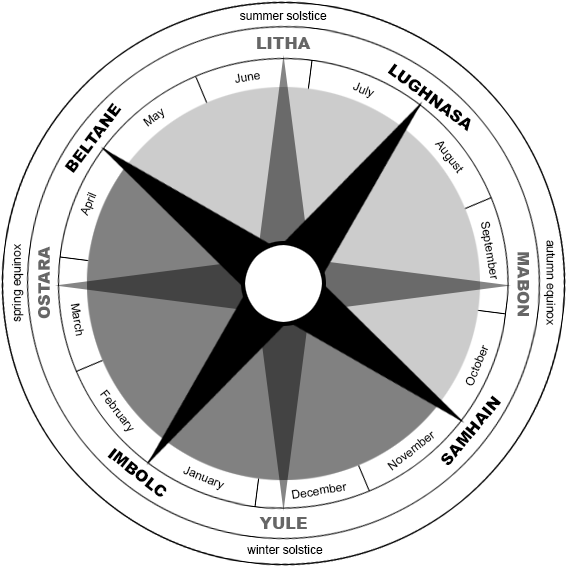
The ceremonial lighting of fire on each of the eight festivals of the Wheel of the Year is a foundational observance of Museum of Hearth. The Museum declares the preservation and continuation of this practice to be an essential expression of its living cultural heritage and affirms its intention to maintain the right to conduct such ceremonial fires, subject to applicable public-safety and environmental regulations.
Museum gatherings on these dates may include workshops, music, special rites and shared meals.
A Network of Living Hearths
Rather than existing as a single location, Museum of Hearth is envisioned as a network of independent Sites connected through the hearth and the culture of fire.
A Site may include a traditional household or shelter, a functioning hearth or fireplace, gardens and orchards, workshops, community kitchens, spaces for education and artistic activity, digital archives, research projects and ecological initiatives.
Each Site is managed by its Host or Hosts.
Museum Sites might be represented by different communities, which may follow their own declarations, manifestos and practices. Association and communication between Sites are voluntary. Their common ground is the hearth and the culture of fire.
Together, the Sites form an international network of living hearths.
The Museum operates through practical education, craftsmanship, hospitality, voluntary exchange, sustainable and regenerative practices, artistic expression, lifelong learning and cooperation between people and cultures.
The Host
The Host maintains the living character of a Museum Site. The role combines practical care of the hearth and its surroundings with hospitality, organization and the everyday functioning of the Site.
The functions and duties of the Host can be structured in reference to the four classical elements:
FIRE
- lighting and maintaining the hearth;
- fuel management;
- cooking, baking, grilling and brewing;
- drying food and materials;
- providing warmth and light;
- organizing gatherings around the fire;
- creating spaces for music, storytelling, dance and learning.
EARTH
- collecting and preparing firewood;
- maintaining buildings and shelters;
- constructing and repairing hearths;
- gardening and food production;
- organizing the Site;
- documenting its history and activities;
- caring for tools and infrastructure.
AIR
- communication and hospitality;
- welcoming guests;
- maintaining harmony and balance within the Site;
- recycling and waste management;
- organizing meditation and reflection;
- facilitating fair exchanges of energy, knowledge and resources.
WATER
- collecting drinking water;
- preparing meals and beverages;
- maintaining hygiene;
- caring for physical well-being;
- organizing movement practices such as yoga, swimming and body training;
- supporting healthy daily routines.
The wider functions and purposes of Museum of Hearth are presented in Missions.
Custodian Ignis, who supervises the continuity and preservation of the Museum, is introduced separately in {Q}.
Areas of Activity
- traditional households and shelters;
- functioning hearths and fireplaces;
- gardens and orchards;
- workshops for traditional crafts;
- domestic animals;
- educational programs;
- seasonal festivals;
- artistic residencies;
- community kitchens;
- digital archives;
- research projects;
- ecological restoration initiatives.
Economy
Museum of Hearth recognizes the conventional meaning of microeconomics , while also using the term in a practical sense of its own.
Microeconomics, within the Museum, means bringing economic activity toward the smallest practical scale. Each Site seeks a high degree of economic independence through local sources of food, water and materials, local production, nearby markets, and direct exchanges of goods, services, knowledge and work. Whenever possible, participants know the people who produce, provide and exchange what the Site needs.
This approach does not reject the larger economy or propose a return to hunter-gatherer life. Museum Sites exist within the conditions of the twenty-first century and participate in wider economic systems when necessary. The Museum instead explores how much economic activity can meaningfully return to the scale of the household, Site and local community.
The Museum acknowledges the influential definition of economics formulated by Lionel Robbins in 1932 as the study of human behaviour in relation to scarce means which have alternative uses. The Museum does not reject this perspective, but explores whether scarcity must always constitute the primary frame through which economic relationships are understood.
As an alternative point of departure, the Museum investigates abundance and balance. Natural systems can produce extraordinary abundance, while their continuity depends upon relationships, limits, cycles and dynamic equilibrium within an ecosystem. The Museum therefore searches for economic paradigms capable of connecting the realities and achievements of twenty-first-century civilization with forms of exchange that emphasize sufficiency, circulation, reciprocity and balance rather than scarcity alone.
This is neither a rejection of contemporary civilization nor a proposal for a binary revolutionary alternative. It is a search for a middle path: examining where existing economic structures serve human needs and where other forms of organization, distribution and valuation may offer useful corrections. Questions of unequal access to resources, excessive consumption and the production of materials that rapidly become waste belong naturally to this investigation.
In observing contemporary civilization, Museum of Hearth sometimes adopts the perspective expressed in Koyaanisqatsi: looking at technological civilization from sufficient distance to ask whether its extraordinary productive capacities remain balanced with human life and the larger ecosystems in which they operate.
Particular attention is given to Re-cycling: completing cycles of use rather than simply discarding things. This includes repairing and reusing objects, reducing waste, recycling materials and packaging, finding further applications for products after their original use, and, where gardens are present, returning organic matter to the soil through composting.
The Museum studies forms of reciprocity, sharing and community management found in traditional and Indigenous societies, particularly among Native Americans , together with contemporary models of locally governed common resources. These are treated as sources of practical knowledge rather than models to be reproduced literally.
The Museum evaluates economic exchange through a triad of fundamental values:
Energy represents the resources and capacities contributed by an individual or community. Time measures the portion of life involved in an activity or exchange. Money is one possible instrument of exchange and compensation, but not the only measure of value.
Within this framework, work is explored not only as contracted time exchanged for financial compensation, but also as a necessary contribution to the life of a community. Participation itself may create value, while a functioning community in turn contributes to the basic security and well-being of its participants.
Volunteer exchanges, internships, apprenticeships, direct exchanges of skills and services, and collaborative projects are therefore natural instruments of Museum microeconomics.
The objective is not to replace the existing economic system with another universal system, but to explore a transition toward smaller, more resilient and more cooperative economic relationships.
Research
The Museum conducts and promotes research in:
- sustainable living
- traditional and alternative technologies;
- alternative sources of energy
- ecological design of shelters and clothing
- Re-cycling as a paradigm, particularly re-use of plastic waste
- human physiology and movement;
- regenerative agriculture;
- relationships between humans and the natural world
- artificial intelligence as a tool for education and communication;
These and other questions are explored further through the Museum of Hearth Research program, currently under development.
Ocean and Planet
The philosophy and activities of the Museum extend beyond the hearth into studies of martial arts, Yoga, dance, swimming, sailing, body surfing and the human relationship with Nature.
The Museum's connection with the Ocean developed particularly through the life path of Mac Waves, its current representative. The hearths and the last permanent Museum Site on the coast of Tenerife became a bridge toward navigation, ocean swimming and a life increasingly connected with the sea.
As Mac Waves continues this journey, the Museum travels with him through encounters with local communities, while maintaining its original connection with fire and the hearth on the shores it reaches. This practice continues presently in San Pancho, through bonfires on the beach and at Casa Guayabo.
Mac Waves' ocean swimming, navigation, encounters with dolphins and wider exploration of the Ocean are presented on the dedicated Ocean page.
Vision
The long-term vision of the Museum of Hearth is an international network of living hearths where people gather to learn, create, celebrate and cooperate.
By preserving one of humanity's oldest technologies—the controlled fire—we also preserve the values that allowed civilization to emerge: hospitality, craftsmanship, community, curiosity and respect for nature.
Every hearth becomes a place where the past interacts with the future.
Missions
The missions of Museum of Hearth develop from the hearth itself and extend into education, community life, economics, ecology and research.
- Maintenance of Fire — preserving the practice of lighting, maintaining and responsibly controlling fire as a living human tradition.
- Hearth Technologies — preserving, studying, constructing and developing fireplaces, hearths, ovens and related traditional and contemporary fire technologies.
- Culture of Fire — maintaining the hearth as a place of gathering, cooking, craftsmanship, storytelling, music, ceremony, exchange of knowledge and community life.
- Wheel of the Year — maintaining the ceremonial fires associated with the eight festivals of the Museum's official calendar and preserving their connection with natural cycles.
- Living Hearths — supporting the creation and operation of autonomous Museum Sites adapted to their particular communities, environments and local conditions.
- Practical Education — developing education through experience, participation and direct transmission of knowledge and skills.
- Local Education — exploring educational programs shaped by the actual needs, resources, skills and possibilities of a local community rather than by a single universal curriculum.
- Microeconomics — researching and practicing economic activity at the smallest practical scale through local production, local markets, direct exchange, cooperation and greater economic independence of individual Sites.
- Re-cycling — reducing waste by extending the useful life of materials, repairing, reusing and repurposing products, recycling resources and returning organic matter to natural cycles whenever possible.
- Food — supporting local food production, gardening, preparation, preservation, cooking and the development of greater knowledge of where food and water come from.
- Work and Exchange — exploring forms of work based on meaningful participation and contribution to community life, including voluntary exchange, apprenticeships, internships, direct exchange of skills and collaborative projects.
- Meaningful Work — creating opportunities for activities in which livelihood, individual abilities, personal purpose and creative self-expression can meet.
- Hospitality and Community — maintaining spaces in which people can gather, exchange knowledge and resources, cooperate and participate in the life of a Site.
- Traditional Knowledge and Craftsmanship — preserving practical skills, technologies and forms of knowledge transmitted through cultures and generations.
- Alternative Economic Paradigms — researching relationships between scarcity, abundance, reciprocity, distribution, Energy, Time and Money, and exploring economic models compatible with resilient local communities.
- Research — supporting practical and theoretical investigation of traditional technologies, sustainable living, ecological systems, human movement, regenerative practices, artificial intelligence and relationships between humans and Nature.
- Earth — encouraging observation of natural cycles and responsible participation in the ecosystems upon which human communities depend.
The ocean-related missions and research arising from the particular path of Mac Waves are presented in the Ocean section.
Trainings
section under development
Journeys
section under development
{Q}
Custodian Ignis represents a supervising Persona (steward) of the project.
He / She / It / They take responsability for continuity and the long-term vision of Museum of Hearth and of {R69}.
To visit {Q} 's page, click the link -
Technologies
section under development
Gaia
The Museum encourages careful observation of natural rhythms, marine life and the interconnected systems of the Earth, inspiring a deeper awareness of humanity's place within the living planet.
Gaia explores humanity's relationship with the living Earth and the ecosystems that sustain civilization.
section under development
Spaceship Earth
Human civilization is viewed as a shared voyage aboard a living planet requiring responsibility and cooperation.
section under development